Is Composite Decking Slippery?
Slippery decking can be a real hazard, with falls potentially leading to serious injuries. It’s perhaps no surprise, then, that one of the biggest questions the team here at Composite Prime is asked by customers is: is composite decking slippery?
We take the safety of our products extremely seriously, and all our composite decking has been developed to be slip-resistant. In this article, we’ll take a closer look at composite decking and how it compares to other surfaces when it comes to slip resistance.

How slip-resistant is composite decking?
Modern composite decking is extremely slip-resistant and is manufactured so that it has additional grip. This means that it doesn’t get slick when it rains. Instead, the surface maintains its grip, meaning you don’t have to worry about slippiness.
With this in mind, high-quality composite products are designed to help you keep your footing. All the products manufactured by the team here at Composite Prime are slip-resistant for your complete peace of mind.
Comparing composite to timber for slip resistance
While traditional timber may look attractive, it is significantly more hazardous than composite. When it rains, wood can absorb moisture, which creates a smooth surface that reduces grip. This means it can be dangerously slick if not properly maintained.
In contrast, the capped surfaces of composite decking enhance safety, as they are moisture-resistant and therefore not slippery. Overall, this makes composite a much safer choice when compared with timber.
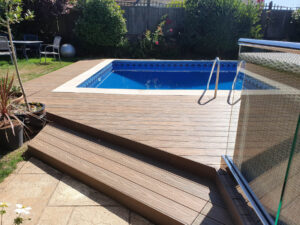
Maintaining grip in wet and icy conditions
While composite products are designed to be slip-resistant, extreme weather like ice and snow can still create hazards on any kind of surface. With this in mind, there may be things you can do to maintain grip during wet and icy conditions.
This could include:
- Regularly removing leaves, moss and other debris that can trap moisture and reduce traction
- Promptly clearing up any spillages from drinks or plant pots
- Using salt-free deicer products to manage ice without running the risk of damaging the decking
- Avoid cleaning with harsh chemicals, which could compromise the anti-slip finish
- Replace old wooden decking with new, modern composite options
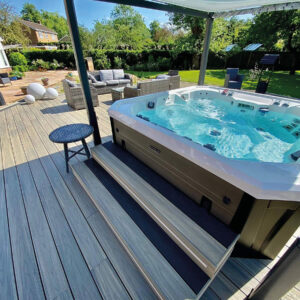
Why is slip resistance important for outdoor decking?
Choosing slip-resistant decking for your outdoor spaces has a number of benefits. These include:
- To prevent injury – Slips and falls can cause serious injuries, meaning slip-resistant decking is important for safety reasons.
- Weather exposure – Outdoor decking is exposed to all of the varying weather elements that the British weather can throw its way. This means surfaces can become slippery more quickly if they don’t have slip-resistant technology in place.
- Use for all ages – If you have children, elderly or vulnerable people in your home, they may be more likely to lose their footing. Having slip-resistant decking will minimise this risk.
- Year-round use – Slip-resistant materials allow outdoor spaces to be used all year round in a safe manner.

At Composite Prime, all our composite decking is slip-resistant, allowing you to use it safely in all conditions. We supply decking, cladding and fencing for customers across the UK, so to get your free quote, contact our expert team today.
